

This is a guest post series about power pop featuring some of my favorite music writers. We’ll be sharing a new installment every few weeks or so (while supplies last). Full series here.
Is It Power Pop?
By Joe Bonomo
One evocation of power pop has always stuck with me.
In a radio interview sometime in the 1980s, Marshall Crenshaw mentioned “The Kids Are Alright,” remarking on the chorus’s pretty ascending/descending melody and how The Who attack it with their performance.
I tend to favor the power side of the equation—which is another way of saying that I like loud guitars! Back in Biblical times, the differences between, say, The Dave Clark Five and Freddie and The Dreamers were measured less in the pop appeal of their songs than in the relative power behind those songs, the sheer loudness, the mania, of those early Dave Clark Five singles heralding an era where bands like Raspberries, The Romantics and others would sing pop songs at high volume.
I’m hardly a purist (though I know what I don’t like).
I think that there’s plenty of room inside of the genre. If I start in the early- and mid-‘60s with The Beatles/Merseybeat sound and draw a line through the next few decades, I can hear boisterous elements of power pop in garage rock, freakbeat, glam, pub pock, mod revival, Medway sound, jangly indie rock, and pop punk songs. Melody, hooks, guitars, and a driving arrangement work for me, no matter what tradition the artist or band is mining.
Narrowing my favorite power pop songs to five choices was nearly impossible! I consciously ignored some of my longtime favorites that I see on many a list of this sort (apologies to The Who, Badfinger, Raspberries, Big Star, Flamin’ Groovies, Shoes, The Records, The Knack, Matthew Sweet, et al).
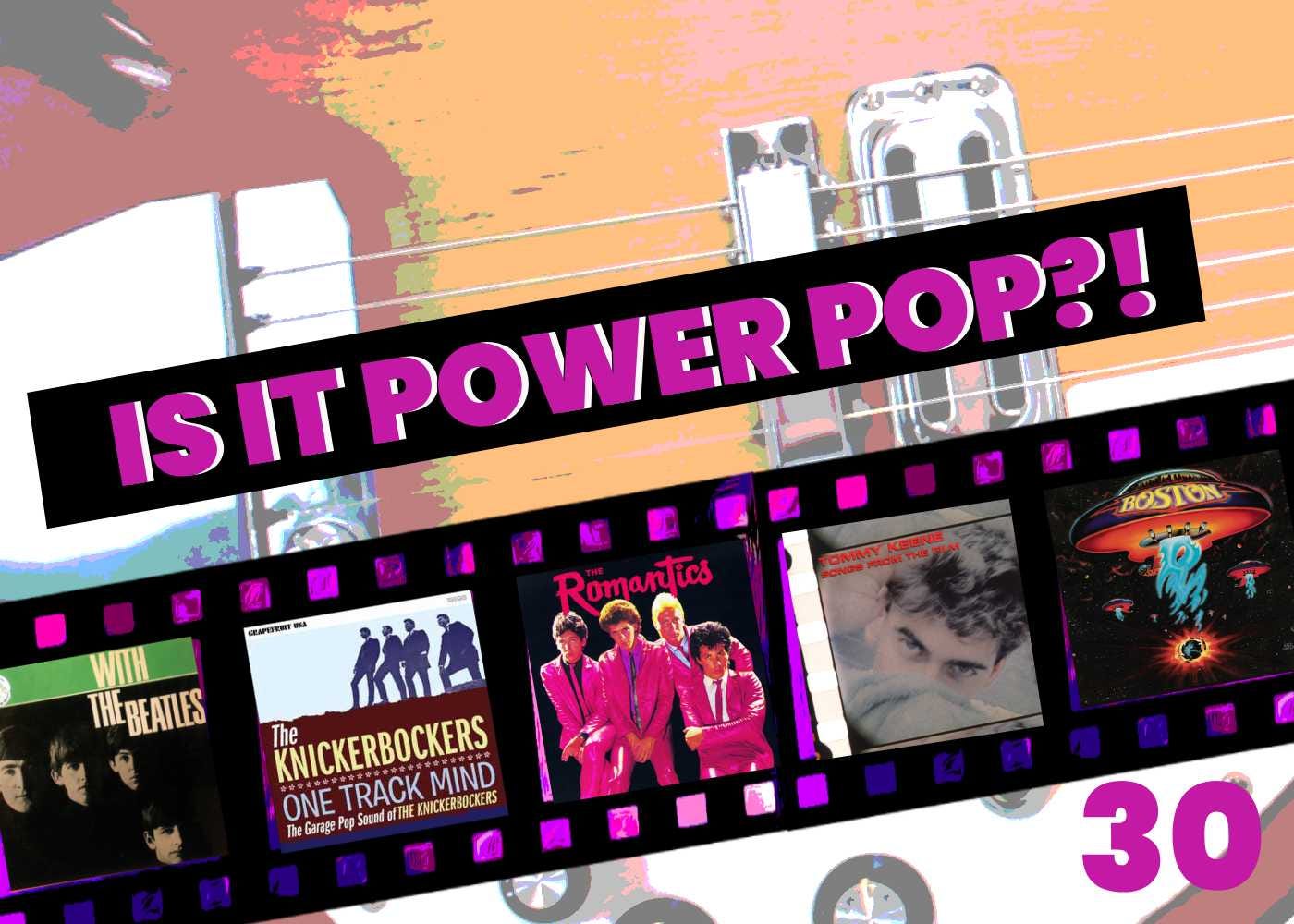
“Hold Me Tight” by The Beatles
The Beatles recorded this fun, rowdy Paul McCartney tune in September of 1963, four years before Pete Townshend coined the term “power pop” in describing The Who’s sound. Yet, to my ears, the hallmarks of the genre are all here: a galloping rhythm; bright, boisterous vocals and harmonies; excitable handclaps; a singalong chorus; dynamic chord changes, especially into and out of the bridge; hooks galore. Both McCartney and John Lennon, and many critics, later dismissed the song, but I’ve always dug its exuberance. In some circles The Beatles may not be routinely associated with power pop, but its DNA is coiled deep inside this early, propulsive rocker.
“One Track Mind” by The Knickerbockers
The Knickerbockers’ sublime 1966 single “Lies” is a long-celebrated power pop classic; their follow up 45 is pretty great, too. Powered by Beau Charles’s killer riff, “One Track Mind” rides a spirited melody—sung with gusto by Buddy Randell in full-on Lennonian mode; dig his Mop Top wail at the two-minute mark—over a rousing arrangement in which the rhythm section (John Charles on bass and Jimmy Walker on drums) both rocks and grooves. The harmony-laden chorus is the epitome of mid-1960s AM radio-ready catchiness: an all-too-relatable heartbreak lament that’s also easy and fun to sing along with, and impossible not to move to.
“More Than a Feeling” by Boston
My dark horse pick, as few people associate Tom Scholz with power pop. Yet I’ve always heard this mammoth hit as a worthy contender. Scholz took five years to write and assemble the song, which he describes as “a bittersweet ballad,” a ballad that’s given momentum and heft by a powerful performance (in the end, Scholz on electric, acoustic, and bass guitars, Brad Delp on lead and backing vocals, and Sib Hashian on drums). The pretty melody, sung alternately sweetly and robustly by Delp, sits atop a bed of massed guitars, and it’s Scholz’s fret work in service of the tune that pushes “More Than a Feeling” into power pop territory.
The guitar solo comes straight out of mid-1960s Top 100, multi-tracked, and brightened with studio sheen. Nirvana, Hoodoo Gurus, and other bands would go on to poke fun at the ubiquitous song, a Top 5 smash in the fall of 1976 and a future Classic Rock staple, but I like to think that Cyril Jordan and Chris Wilson of Flamin’ Groovies would’ve written it if they could. Or if Scholz hadn’t gotten there first.
“Gimme One More Chance” by The Romantics
The Romantics’ debut album is a stirring dose of loud, tuneful, muscular power pop. The album-closing “Gimme One More Chance” is an all-time fave of mine, a desperate and urgent appeal made with slashing guitars. In fact, nearly two thirds of the song is given over to the pleading chorus and the excoriating guitar solos, leaving the verses, sung by an unhinged Wally Palmar, an afterthought. His and Mike Skill’s riffs churn atop bassist Rich Cole and drummer Jimmy Marinos’ rhythm bed, a sonic evocation of the pounding heart and anxious insides of a man who craves just one more chance.
Remember, The Romantics were a born and bred Detroit band. If they chose not to pursue the scorched earth sound of the MC5, The Stooges, and other Motor City bands, they nonetheless here offer a version of the city’s ethos as filtered through Rickenbackers and red leather suits.
“In Our Lives” by Tommy Keene
It’s difficult not to hear the best of what power pop has to offer in the songs of the late, lamented Tommy Keene, who died in 2017. A terrific songwriter and singer, and an underrated guitarist, Keene was indebted to the craftmanship of previous eras, offering his idiosyncratic take. Songs from the Film was produced by Geoff Emerick and released on Geffen. The major label boost made us Washington D.C.-area fans very happy, though it took me some time to shake off my disappointment in the album’s slick sound, relative to the nervy, quirky, slightly rawer records Keene had released earlier (especially 1984’s Places That Are Gone EP).
Now the album is among my favorites of his. The glorious “In Our Lives” is vintage Keene, and power pop at its best. Backed by his potent band—Billy Connelly on guitars, Ted Niceley on bass, and Doug Tull on drums—Keene sings an expressive melody complemented by chiming guitar lines, laying the runway for the elevating, breathtaking chorus where the harmonies and guitars blend blissfully. Though the lyrics remain obscure to me, the feeling sure is clear. The chorus is my favorite moment in any Keene song, reliably sending me each time I hear it, still, nearly three decades on.
Give the algorithm a piece of your mind!
Previously On “Is It Power Pop?!”
Is It Power Pop?!

This is a guest post series about power pop featuring some of my favorite music writers. We’ll be sharing a new installment every few weeks or so (while supplies last). Full series here.

I too thought the Dave Clark 5 was a force. I’ll always remember hearing that snare cracking on Bits and Pieces. My Boston selection would have been Something About You. The Romantics album is perfect, perfect I say, although I lean When I Look in Your Eyes. As the resident Tommy Keene expert around these parts, great pick and another perfect album. Even though in my mind every TK album was perfect. Miss him 🥺 Fun read!
Three cheers for The Romantics and Tommy Keene. Both put out a solid number of great guitar pop/power pop. For those who got off The Romantics train after the first album, I recommend National Breakout - the follow up flop to the debut. It’s more in line with their Detroit garage roots but chock full of nice tunes. And now for the predicted commentary on Boston. Growing up in the 70s, I heard the tracks incessantly on AOR radio and that association will always lump them in with their non-power pop overproduced contemporaries of the era. That album was also in my household, and with song clocking in at 4 minutes and 45 seconds, it’s way too long to fall within my scope of power pop. (Fully, recognizing that Shake Some Action isn’t far behind on length) Respectfully dissent.
PS - love IIPP.