

Talking Art With Chris Mars
Thoughts On Painting, Creativity, Songwriting & More

This is the first installment in a five part RTL series about drummers and drumming.
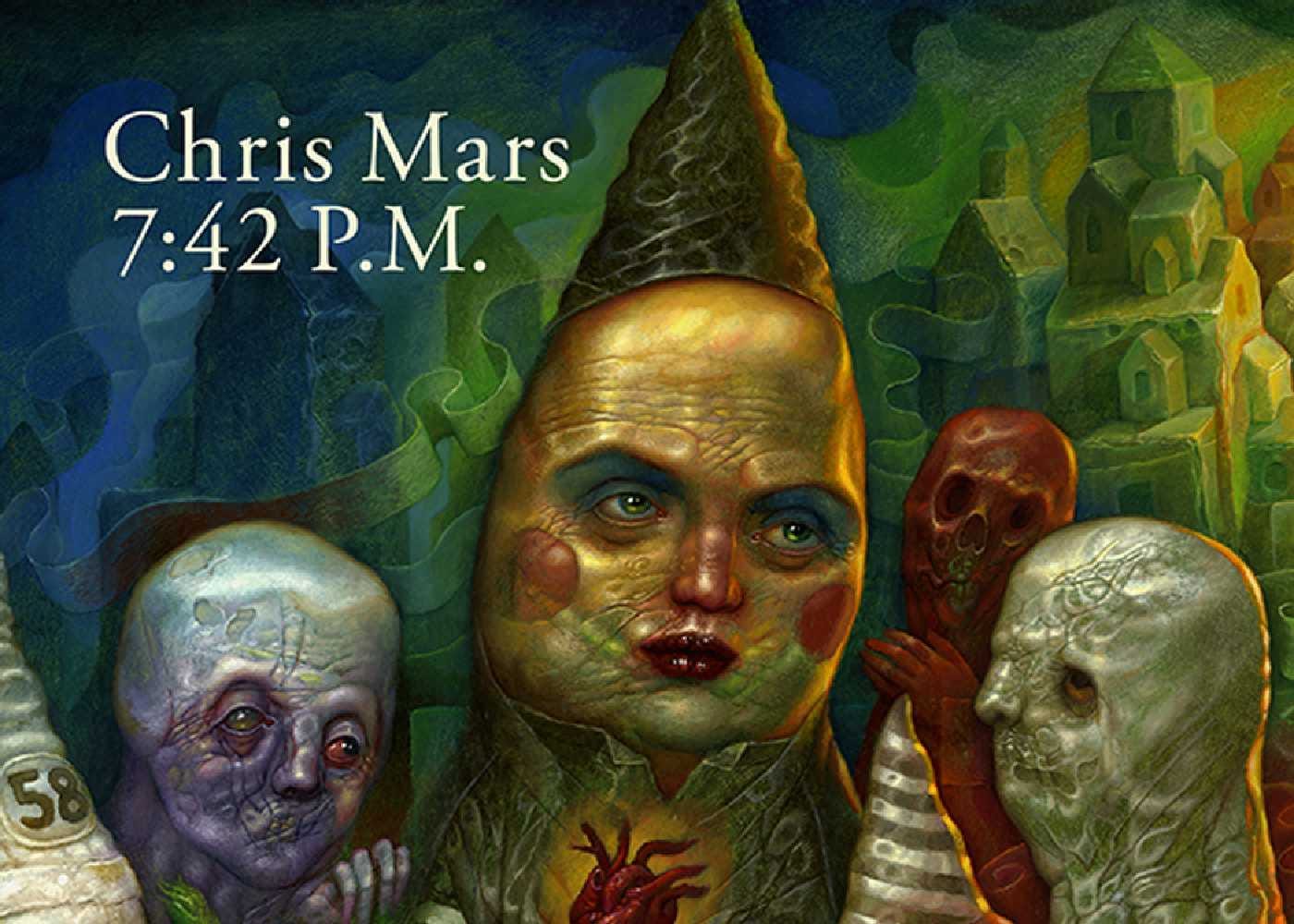
My friends at Rare Bird recently asked me to interview Chris Mars about his new art book 7:42 P.M.
I’ve published several novels and essay collections with Rare Bird and worked on a few other projects with them over the years, so it wasn’t completely out of the blue—but I assume the main reason I got the nod is because my publisher, Tyson Cornell, knows I’m a Replacements fan who counts Mars as an early drumming influence.
I jumped at the opportunity, but felt some trepidation at the thought of engaging a successful painter about his highly-respected work. Although I’ve always enjoyed modern art, I’m no expert. So, I did some research and re-listened to Mars’ excellent 2023 release, The Average Album, while waiting for my copy of 7:42 P.M. to arrive.
Chris Mars has led a truly inspiring, and often reclusive, creative life since leaving The Replacements in 1990.
I kept up with him (and the other former Replacements) over the years, but didn’t fully appreciate the breadth and width of his output. The sometimes overlapping worlds of painting and music (via short films and music videos) became a running theme in the questions I jotted down to spark our conversation.
I struggled with whether or not to specifically ask about The Replacements, ultimately deciding against it once the book arrived and I was able to fully immerse myself in his beautifully reproduced visual creations. We did talk about his solo music—and briefly about his experience with the “music business”—but mostly as it relates to storytelling, inspiration, and the different approaches he takes to creative expression.
Below are a few favorite exchanges from our conversation. You can read the full interview at Rare Bird’s Bird’s Eye View newsletter archive.
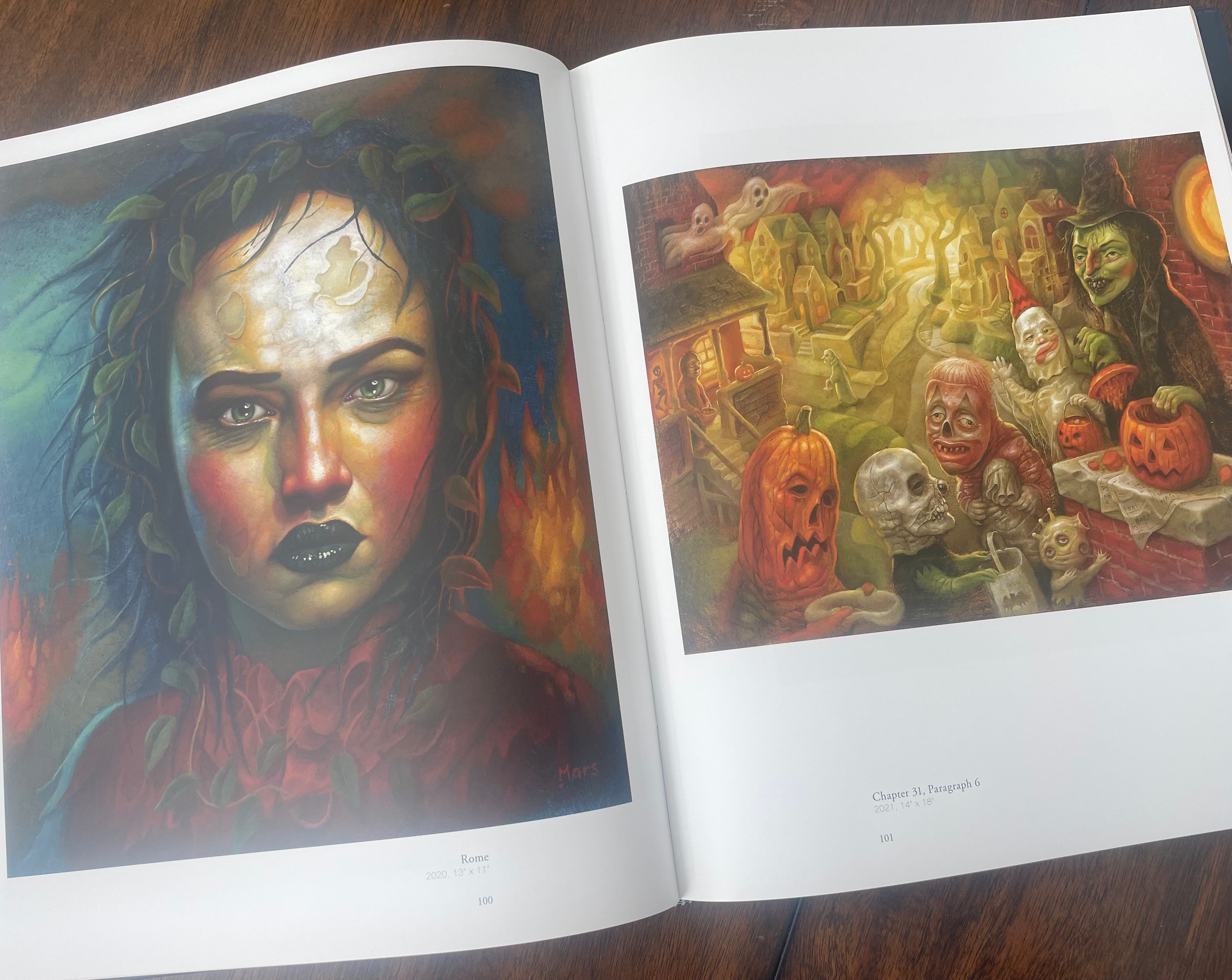
In the book you describe life, and by extension your art, as “sedimentary—that everything we have ever been we still are, only with more and more layers...” Do you have a sense of the new layers your artwork has accumulated since (your previous art book) Tolerance was published?
Chris Mars: While the themes explored in my work—along with the emotional content, technique and aesthetic—continue across the body of work overall, within 7:42 P.M. the layers of life experience, growth and perspective do shift. New “layers” would, to me, include less anger in the work (or maybe less direct, obvious anger), an older human’s perspective on life (my own and others’, and just the sense and shape of life outside of my own as well).
Also, the work in 7:42 P.M. comes perhaps more confidence in technical execution of a painting. I think color itself has become, along with those other new layers, an additional way to lure a viewer into a painting—a painting in which I might be asking them to explore something a viewer may or may not be fully attracted to or comfortable with.
The paintings in 7:42 P.M. are overall more colorful. There is personal satisfaction in using color in a different way than say the work embodied in the previous book. I feel braver with color, and probably braver as a painter in general.
The paintings in the book seem to invite narrative; my mind wants to tell itself a story in order to make sense of what I’m seeing. Since you’re also a songwriter, I’m curious if you approach painting as a storyteller?
Chris Mars: Great question! Yes, there are similarities. With songs, for me, words are a very different process than melody… and it’s melody that is more like painting—there’s a flow to it; it moves from one point to the next nearly unguided. But with painting it comes more naturally and spontaneously for me than words or even melody do. I have to wait for songs to come to me, while with painting I can will it at any time.
Multiple stories come along as a painting unfolds; maybe it’s more like filmmaking in that sense. Then as the composition, expression and story of a painting start to cement themselves (into a song of sorts), the title becomes the lyric—the final words of the painting’s story. But it is interesting that beyond my intentions and where a painting lands for me conceptually or narratively, others see different things and maybe have a different story; a different perspective in what they see. And that is great! I love that paintings can do this—mold into a more personal story. Others’ paintings do that for me as well!
Are there ways in which your decades in and around the music business prepared you for a fine art career?
Chris Mars: Yes. First, I got it (being in a rock band) out of my system—touring, working within a group, the “music business” in general. By the time that ended, I was quite hungry for the solitude of pursing my creative expression, quietly, independently, and in one place. I always loved the creative aspects of songwriting and recording during those music years…touring and performing not so much.
Now, with advances in technology, I can continue to explore music on my own, and I do—generally as a break between paintings. But sowing those wild oats was a very good thing in retrospect as it made me “ready” for the seclusion it took (and takes) to concentrate, focus and immerse myself in developing my visual technique and expression. Me and my wife are both home bodies. I’m generally geared more toward, and get more energy from, introversion. This infuses my desire to paint.
Remind The Algorithm That Remember The Lightning Exists…
The Lasting Influence Of 'Tim'

In June 1985, ramshackle Minneapolis quartet The Replacements entered the studio to record their break out album, Tim. To celebrate the upcoming 40th anniversary of this landmark release, we’re going all out with Tim love letters this week.


Very cool!
I'm sure Chris knows, and is possibly influenced by, Zdzisław Beksiński. Whilst Beksiński is more known as a horror/nightmare artist (like Giger), there are still some references that I can see with Mars' paintings and his. I also see similarities with German Expressionists, Otto Dix and George Grosz.
I like them!
I also appreciate that you let his visual art speak rather than diving into the past with questions about a band he was in decades ago.
Thank you for this interview!