

This is a guest post series about power pop featuring some of my favorite music writers. We’ll be sharing a new installment every few weeks or so (while supplies last). Full series here.
Is It Power Pop?
By R.E. Seraphin
I grew up in a metal household, and power pop was not something I could identify until I was in my late teens (although Sammy Hagar, who was my second ever concert, certainly has moments…).
But then I started playing in bands and, fairly or not, the tag has followed me ever since. While I embrace and love the genre for the most part, I’m not particularly legalistic about it—if you say it’s power pop, well, it probably is. However, here I am writing this article, so I’ll take a stab at creating some parameters.
In my opinion, power pop is often better defined by what it is not than what it is. For instance, power pop is not the sound of success. The most notable and well-known power pop groups are perennial losers: bands that almost went somewhere (e.g. Big Star, Badfinger), but didn’t due to some combination of tragedy and bad luck, and bands that never had a shot (basically all other groups).
Despite its obscurity, it’s not especially cool music.
Mostly beloved by nerds like myself, rather than the hordes of happening ladies its progenitors assuredly believed they would attract, power pop has limited appeal in some ways. It is record collector fodder, but not exactly mysterious or intriguing in the way, say, free jazz or post punk are. The music, with its rather mainstream pop and rock influences, simply isn’t opaque enough. Its primary subject matter (girls, basically) is likewise a little too familiar.
The power part of power pop is also somewhat of a misnomer, because it is not particularly powerful or masculine music. It is a genre generally led by post-adolescent suburbanites, enamored of the British Invasion, perpetually “dissecting serial monogamy” (in the words of Robert Christgau) in song form. For all of the windmilled strums and distorted power chords, this is admittedly wimpy music.
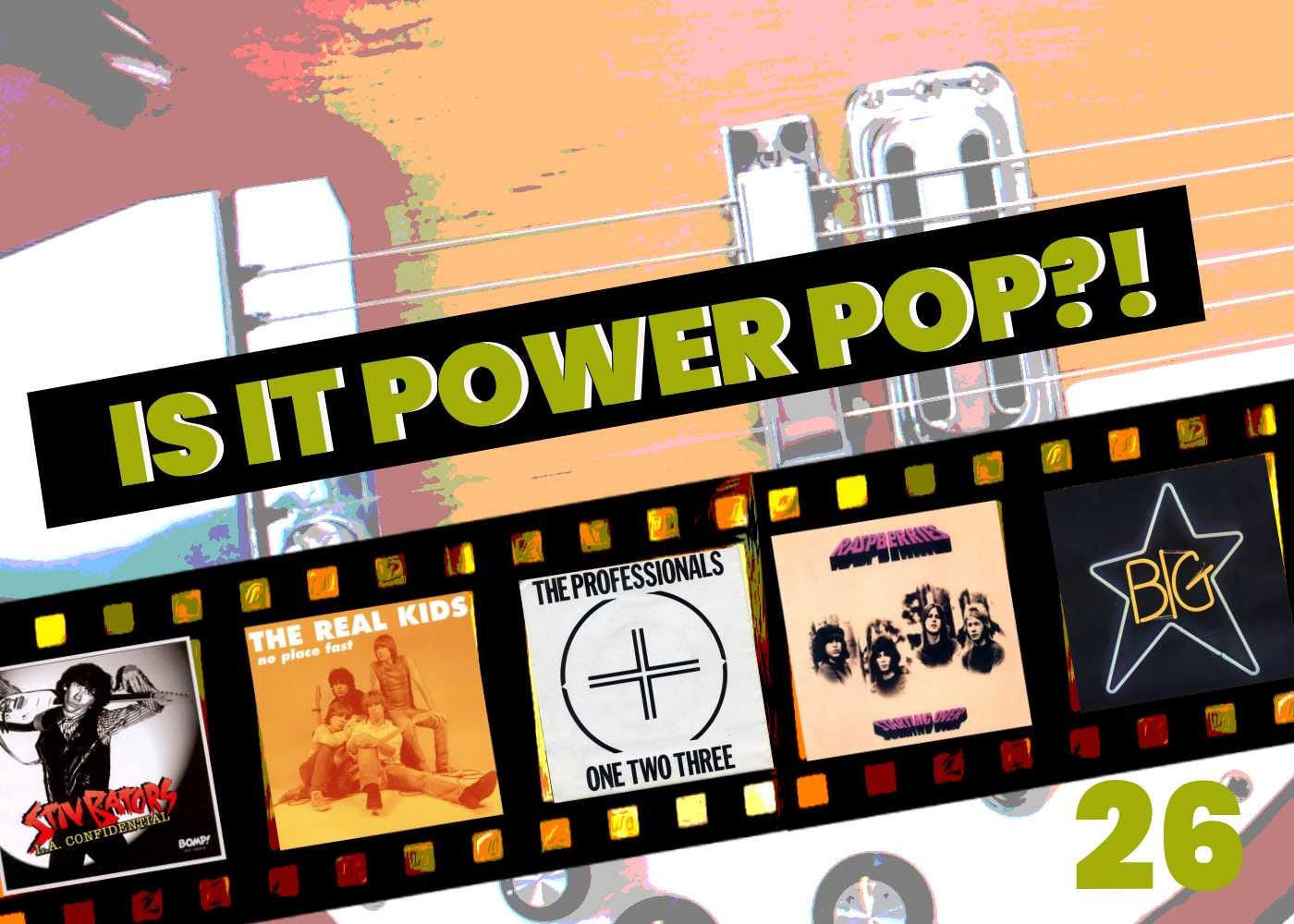
Yet, in an effort to contradict myself, this last point led me to thinking: “What are the toughest, meanest, machoest power pop songs out there?” Here are five of the manliest tunes I could muster.
“Party’s Over” by The Raspberries
I present to you a second contradiction within as many paragraphs: Raspberries were an actual, legitimate pop sensation—a group that nearly topped the Billboard Hot 100 with their second single, and bonafide power pop classic, “Go All the Way.” But undoubtedly their crowning achievement was their final LP, Starting Over. This album is total The Who worship and almost any of the songs could’ve made this list. But I chose this one, sung by lead guitarist Wally Bryson, for its rough-and-tumble, Free-inspired riff, its notable use of the word “shit” in the second verse (“I’m crazy but I don’t give a shit!”), as well as the insinuation that the narrator fucks his guitar in the third verse.
“It’s Been Real” by The Real Kids
John Felice, the principal singer and guitarist of The Real Kids, is one of the darker figures in power pop. His lyrics are often misogynistic, occasionally homophobic, and usually kind of juvenile. Nonetheless, he remains one of my all-time favorite songwriters. I’m especially taken with their ‘80s output, like the album this song comes from. This song has it all: Byrdsian guitar solo, exuberant vocal harmonies, Everly Brothers-esque hooks. But the lyrics are why it’s on this list, especially the opening line: “I know these streets like the back of my hand/you fuck with me, you gotta fuck with my band.” Now that’s tough.
“Circumstantial Evidence” by Stiv Bators
This song makes my list because of its central conceit—the narrator is a bad boy accused of robbing a convenience store and is on the run from the coppers (“circumstantial evidence/you can’t pin a thing on me”). Stiv Bators, best known for fronting CBGB legends The Dead Boys, is also undoubtedly the machoest lead singer in power pop history, and this album, which he made with members of power pop elder statesmen Blue Ash, is a classic.
“One Two Three” by The Professionals
Another song about being “on the run.” From what, exactly? A little unclear. But we do know the narrator has a “dirty face” and “mess on [his] shoes,” so we can surmise he’s some sort of street urchin and law breaker, much like ex-Sex Pistol and The Professionals singer Steve Jones himself (who had 14 criminal convictions as a lad). This song is debatably power pop but is unquestionably fun, catchy, and infectious. Several Professionals songs could have made this list; I chose this one because it seems to be a plagiarized version of “Second to None” by The Avengers. What could be more macho than stealing your homework from a girl?
“Don’t Lie to Me” by Big Star
Perhaps the most surprising 1-2 punch in Big Star’s small yet highly revered output is Chris Bell’s “Don’t Lie To Me” and Andy Hummel’s “India Song” at the end of side A on #1 Record. They are diametric opposites: the bluesy, shit kicking “Don’t Lie To Me” is the closest Big Star got to hard rock, while “India Song” is the gentlest little trifle in their catalog. This really serves to emphasize how uncharacteristically tough “Don’t Lie To Me” is. The song features Bell’s most menacing vocal, along with a vaguely threatening message (“don’t cross me, babe,” shrieks Bell). However, in true Big Star fashion, there isn’t a satisfying resolution here; in fact, there doesn’t appear to be any consequence to lying or crossing Bell at all.
Give the algorithm a piece of your mind!
R.E. Seraphin is a singer-songwriter based in Vallejo, CA. In 2020, he released his debut album Tiny Shapes, followed closely by the A Room Forever EP. Those two releases were recently reissued on vinyl by Take a Turn Records.
Previously On “Is It Power Pop?!”
Is It Power Pop?!

This is a guest post series about power pop featuring some of my favorite music writers. We’ll be sharing a new installment every few weeks or so (while supplies last). Full series here.

Really enjoyed R.E.'s no-holds-barred, calling it as he sees it, defining of power pop. I just knew it was about attracting happenin' ladies, and appreciated an overview of the manliest tunes for doing so, including the revered Raspberries.
Some good choices. And it's true, a lot of the late 70s/early 80s power pop had great songs hobbled by wimpy production.
The first song that came to mind when I read this was "She Satisfies," by the Chicago-area band Shoes. A lot of their stuff is great, but sounds ethereal. This track actually rocks and even got a bit of airplay at the time on local rock station The Loop