

Interview: David Bash
Behind The Scenes At International Pop Overthrow Festival

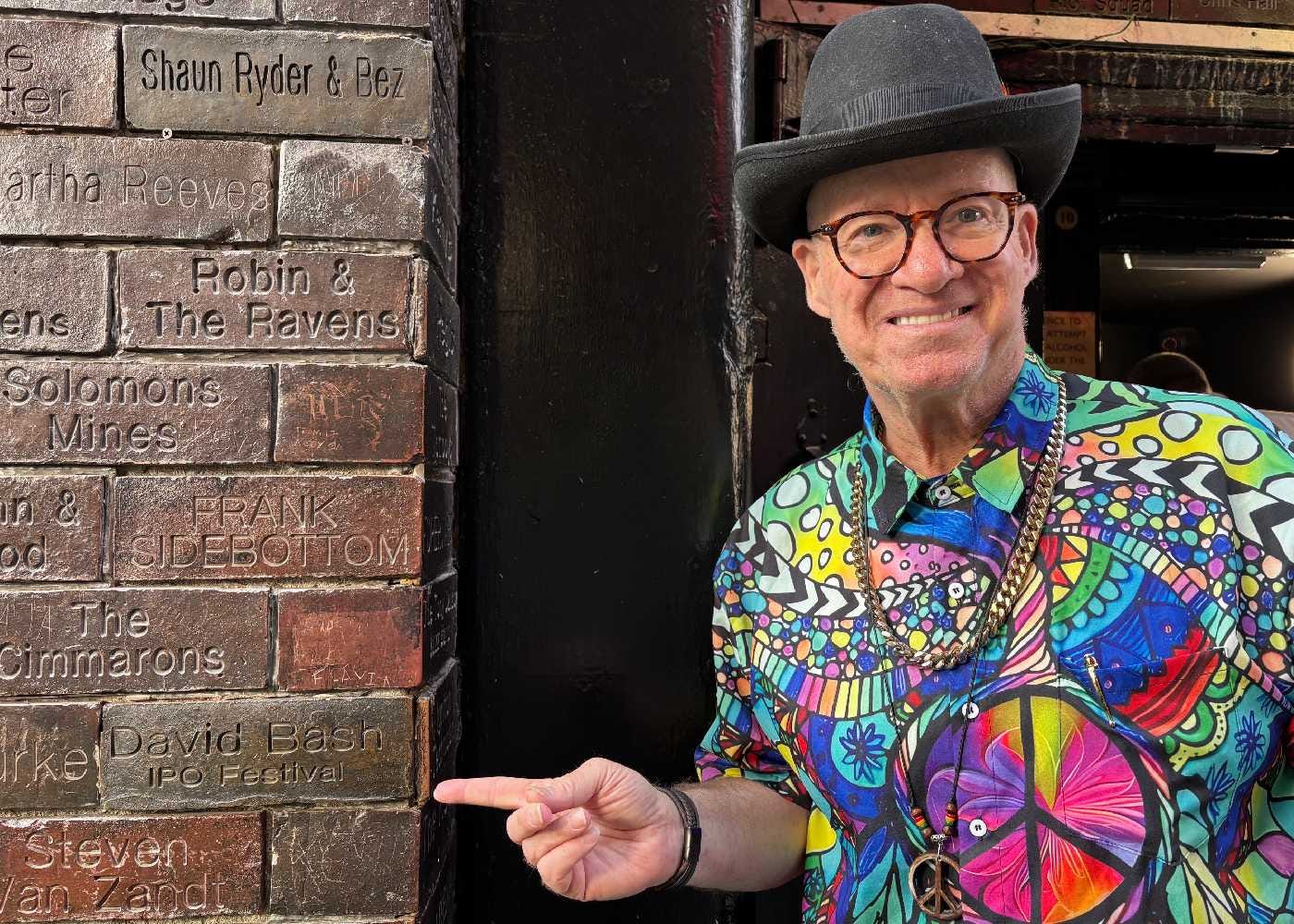
Since 1998, International Pop Overthrow festival has brought power pop (and adjacent) artists and fans together to celebrate the melodic rock music we all love.
Brainchild of lifelong fan and current Material Issues podcast co-host David Bash, the long-running concert series originally launched as an LA-only event. Since then, IPO has expanded to several cities including New York, Chicago, Glasgow, Stockholm, Vancouver, Toronto, and, of course, The Cavern Club in Liverpool, among others.
“I named the festival ‘International Pop Overthrow’ for two reasons: one, as many power pop fans can guess, was to honor the band Material Issue, whose debut LP was entitled International Pop Overthrow. Tragically, their lead singer/songwriter, Jim Ellison, had taken his own life not long before, so I wanted to pay tribute to Material Issue in that way,” Bash told me for the interview below.
“The other reason was I wanted to create an international pop scene designed to ‘overthrow’ what was currently on mainstream radio, which was amelodic music like Korn and Limp Bizkit. Unfortunately, we never reached our goal of overthrowing mainstream radio, but at least we don’t have to hear those bands anymore.”
Almost 30 years later, IPO still shines a spotlight on talented pop rock artists from around the globe.
“I guess the major way our vision has changed is that, when we did IPO exclusively in LA we were able to galvanize a worldwide pop scene under one roof,” Bash said.
“Now each city in which we do the festival is much more regional in nature, where the bulk of the acts who play are local, as are the people who attend. The only exception is Liverpool, and thank God for The Cavern for still being a mecca for pop-oriented acts from all over the world.”
I caught up with Bash by email to discuss IPO’s history, the ways it has evolved over the years, and what fans can expect from upcoming festival stops in Los Angeles, San Diego, and Vancouver over the next couple of months.
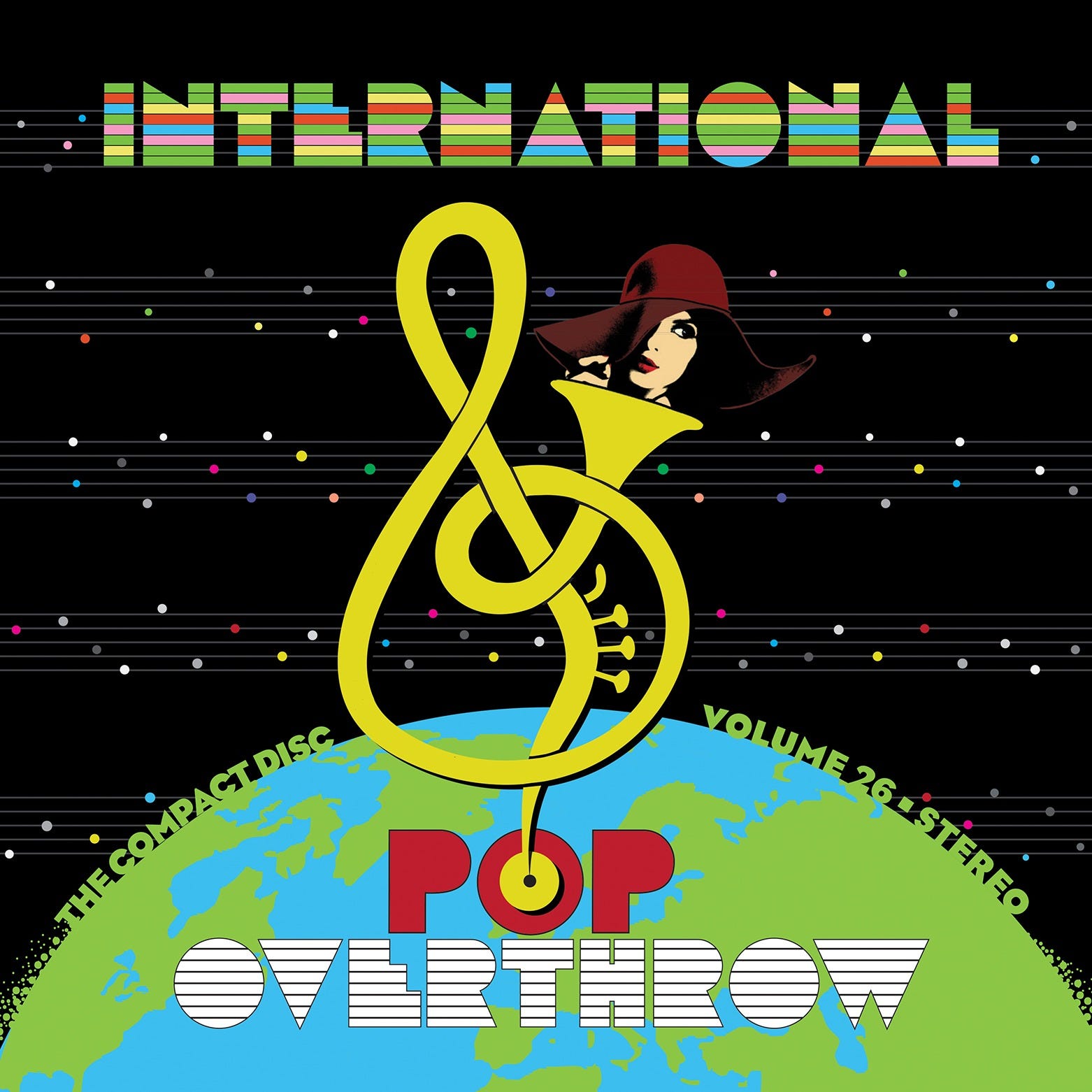
David Bash: International Pop Overthrow Interview
What inspired you to launch a power pop festival in 1998?
David Bash: For a few years I had been writing CD reviews for several pop music fanzines, and got to know many bands from all over the world through that. Several of them had expressed to me an interest in playing in Los Angeles, so I decided to create a platform for them, where we could galvanize a worldwide pop scene under one roof. It happened in December, 1997; I was having lunch with an attorney friend of mine, Ben McLane, and I told him of my idea. He said “you should do it,” and that was all it took!
A big inspiration for IPO was the Poptopia festival, curated by Tony Perkins, also of the great band, Martin Luther Lennon. Tony had done a marvelous job getting together just about every LA based pop band to play Poptopia, beginning in 1996, also recruiting some really big acts like The Posies, Redd Kross, and The Muffs, to name but a few, and his events were a great success.
My idea for IPO was to split the base of acts to around 50% from LA and 50% from the rest of the world, which we were able to successfully do in 1998, as the festival was extremely well attended, and we were able to get several bands from outside the U.S. to come in and play, but I would be remiss if I didn’t thank Tony Perkins for getting the ball rolling; without Poptopia, there would never have been an IPO.
How did you personally become a power pop fan?
David Bash: That’s a really good question, because it’s not like I woke up one day, proclaiming, “I love power pop!” I guess it was spawned from listening to Top 40 radio and loving, among other things, tunes like “No Matter What” and “Go All The Way.” In the mid ‘70s I started buying LPs, and also subscribing to Billboard magazine, where I’d read reviews of bands who “sounded like The Beatles or Badfinger.” I remember reading a review of Pezband’s debut album, which cited Emitt Rhodes, which is how I discovered both artists. From there it was hearing bands like Shoes, Cheap Trick, The Rubinoos and several others on FM Radio stations, and, augmented by buying albums that “looked power pop,” like the debuts by The Cryers and Off Broadway. It went from there.
I wish I could remember the first time I heard the term “power pop.” I was living in New York at the time and wasn’t familiar with Greg Shaw and Bomp! Magazine; maybe it was in Trouser Press? I’m not sure.
What is the state of the international power pop scene today vs. 1998?
David Bash: The mid ‘90s was a wonderful renaissance for power pop, augmented by magazines like Yellow Pills, published by Jordan Oakes; Audities, by Gary Littleton and Anthony Henderson; PopSided, by Steve Schnee and Jim Roe, and Amplifier, by Joe Joyce, as well as consistent reviews by John Borack in Goldmine Magazine, and yours truly in all of the above…but it was definitely Yellow Pills which first helped me to discover so many power pop acts, and made me realize that “there are other people out there in the world who love this kind of music!”
I think it was a combined, synergistic effort by those publications that continued to spur the power pop renaissance, and let musicians who were power pop fans know that, “Hey, there’s an audience for the kind of music I love; I should form a band and we should do it!” The icing on the cake came from Bruce Brodeen and Not Lame Records. His label released several great albums in the mid-to-late ‘90s and beyond, and his mail order catalogues, featuring power pop albums by acts from all over the world, became legendary, as did Bruce. His reviews will never be forgotten, especially when they were tagged with “extremely highly recommended.”
So, the international power pop scene was extremely fruitful in 1998. Unfortunately, major labels weren’t interested, but they had their own problems coming up, when this thing called the internet swallowed them whole.
Today there are more power pop acts from all over the world than there were in 1998, mainly because programs like Pro Tools, etc. have allowed musicians who can’t afford to record in a professional studio to record their own albums, at home or in a less costly studio. Of course, there are plusses and minuses to this. Some people lament that there isn’t as much great power pop as there was in the late ’90s, but in my opinion there’s even more; unfortunately there’s also a lot more that isn’t very good, so it’s harder to separate the wheat from the chaff than there was back in the day.
How has your vision for the festival evolved since it first launched as an LA-only festival?
David Bash: The first four years of IPO Los Angeles were very exciting. Because of internet groups like Audities (named for, but not associated with, the aforementioned magazine), word got around about IPO to people all over the world, and many of them came out to support the inaugural IPO in 1998, as did many bands from everywhere. It was like summer camp for bands and fans, who would congregate at The Orchid Suites hotel in Hollywood and party like it was…1998! Over the next few years we had more of the same, but to a lesser degree as the novelty of IPO was wearing off, and flight/hotel prices started going up.
It was at a panel we put together in 2001 when the main man of the band Rocket Transfer Warehouse, who had been traveling from the east coast each year to play IPO LA, said, “David, it’s about time you took IPO on the road;” mainly because it was getting expensive and wearisome for bands to continue traveling that far. The thought of doing that hadn’t really crossed my mind until he said that, but I did have trepidations. That night, at our IPO show, a gent named Michael Mazzarella from the New York band, The Rooks, who had been at the panel, said, “David, do IPO in New York. Don’t worry about anything; I’ll get you venues, I’ll get you bands, it will be great!” True to his word, he did help me greatly, and we did our first IPO away from LA in December, 2001. Of course, if you look at that date you’ll realize it was not long after September 11. By that tragic date I had completely booked the festival, so I waited a couple of weeks, contacted the bands and said, “Should we still do this?” To a person, they all said, “Absolutely, we need it now more than ever!” So, even though it was still difficult to get to some of the downtown venues, IPO New York was a huge success. In March of 2002 we did IPO in Chicago, which was really meaningful because Material Issue was from there. I think for that reason the people of Chicago really took to the festival, and the bands of the two remaining members of Material Issue played. It was an absolutely great time.
In early 2003 I got a call from a woman named Jean Catherell, who had heard about the festival and asked me, “Have you ever thought about doing IPO in Liverpool, at The Cavern Club?” Well, you could have knocked me over with a feather, as something that lofty was never even considered. I told her it would be a dream of mine to do it there, and she said, “I work with the people at The Cavern. Leave it with me and I’ll be back with you in a few days.” I heard back from her and she said, “They want to do it.” I was in shock, but went ahead and booked the event for October of that year. The response to my invitations was amazing; bands from all over the world couldn’t wait to play The Cavern, which of course is understandable given its Beatles history. It was a bit scary doing something in another country, but it all went really well, and in fact we just celebrated our 22nd year there!
Over the years we’ve added and subtracted cities from our itinerary, depending upon attendance and other factors. Unfortunately, COVID has still eliminated some cities, but the major factor in those decisions are attendance, and how many good acts we’re able to get.
When did you start producing and distributing the IPO compilations?
David Bash: We started in 1998. My friends Steve Stanley and Elliott Kendall were working for Del-Fi Records, which was owned by Bob Keane and had made their name by hosting acts like The Bobby Fuller Four. Steve and Elliott were able to convince Bob Keane to do an IPO compilation; the first year it was only one disc, because I was only inviting acts who were playing IPO to be on it. The following year, as we expanded our roster, we were able to do a two-disc set.
After that, Del-Fi ran into problems, so we needed another label. Fortunately, Bruce Brodeen of Not Lame took it on, which definitely increased interest among power pop fans. The compilations remained at two discs until year five, when we had expanded to New York and Chicago, and I also invited some artists who wanted to play IPO, but couldn’t for one reason or another, so our pool became larger and we expanded to a three-disc set. Not Lame, and Bruce’s offshoot Pop Geek Heaven, remained our label through Volume 21, when Bruce got out of the business.
Fortunately, Omnivore Recordings got on board, and we’re very thankful for that, as they have distribution all over the world and are able to get the comps into more shops. We’re now in our sixth year with them, and the comp has remained a three-disc set since Volume 5! Also, because we’re now in so many cities around the world, the artists on the compilation are much more diverse, both geographically and musically!
Are there any specific artists or performances that stand out for you among the thousands of IPO performances over the years?
David Bash: Oh man, I always bristle at that question because it’s asking me to pick my favorite children! I’ll say the one performance that will always stand out from the others took place in Chicago, in 2011. That year was the 20th anniversary of the release of the International Pop Overthrow album, and Universal Records, who owned the rights, decided to do an expanded reissue of the album, which pleased a lot of people.
The two remaining members of Material Issue, Ted Ansani and Mike Zelenko, thought it would be a great thing to do shows celebrating the reissue, but who would they get as a lead vocalist/guitarist? There was only one answer: a local musician, Phil Angotti, who had been very good friends with Jim Ellison and a huge fan of the band. He knew all of their songs and could both sing and play them, so he came aboard. They were going to go out as Material Issue, but I told their manager, “They should play as Material Reissue, in celebration.” They adopted that name, and accepted my invitation to play IPO Chicago in April of 2011, at at the dearly departed venue, The Abbey. We sold out the 550 capacity room, and I had the honor of introducing the band. I was so nervous because this was a huge deal, but the words came to me and at the end of my introduction, with his family present, I looked up to the sky and said, “Jim Ellison, this one’s for you!” The crowd exploded with applause. The band then came out and did an amazing show; Jim Ellison’s spirit must have been imbued in Phil Angotti, because he played and sang just like Jim.
It was something I’ll never forget, and will be forever thankful to the band for allowing IPO to host them.
The festival has expanded to many cities over the years. Are there any new locations you dream about?
David Bash: Absolutely! Probably the one location I would like to do the most would be Australia, and ideally hold it in Sydney, Melbourne and Perth, the three cities most representative of the pop scene there. It’s only expense and the fact that my wife Rina can only get so many days off of her work per year that has prevented us from going there…and here’s where I should give a shout out to Rina for all the love and support she’s given me and IPO throughout the years. Rina’s an Aerospace Engineer by day, which is a very intense job, but somehow she has the energy to help me with every aspect of IPO, from finding bands online to running the merchandise tables in some of our locations. I think it’s safe to say that without her there’s no way I could have done IPO in so many cities, so we all owe her a huge debt of gratitude!
I’ve also dreamed about Tokyo and Madrid, as those cities just love pop music, but the language barrier has thus far prevented me from pursuing them any further.
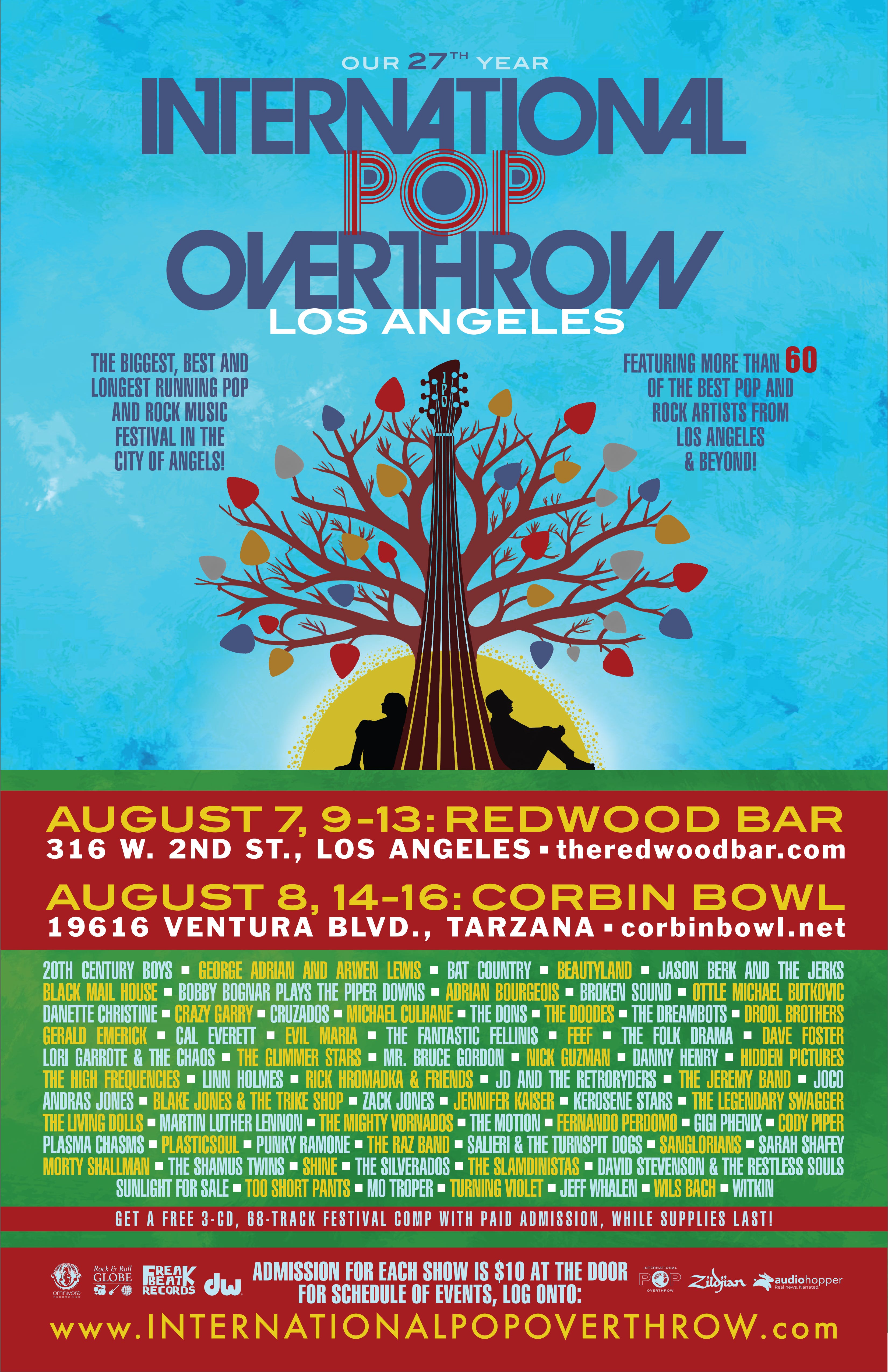
You’ve got three West Coast IPO Festivals in August and September. What can fans expect from those upcoming tour stops?
David Bash: They can expect the same thing as in any other city: high quality artists doing high quality, melodic music. One question I used to get more than I do now (thankfully) is, “So what big names do you have this year?” In the early daze (misspelling intended) of the festival, we were able to secure bigger names because the state of the industry was different than it has been for many years now, but while I knew it would help grow the festival’s fan base, the headaches involved dealing with booking people, managers and egos of many of these artists became way too much for me, and it’s just not within my personality to deal with these things, so after awhile I more or less stopped pursuing them. The way I’ve answered that question for many years now is, “I don’t care about big names, I care about good bands, and we have many of those at IPO!” That’s what people will get when they come to IPOs Los Angeles, San Diego, and Vancouver this summer, as they will in any city in which we do the festival.
When I play the IPO compilations to people outside the “inner circle,” invariably their response is, “Wow, I didn’t know there were people out there still doing this kind of music! It’s really good!” One myth I’d like to try and dispel here is that “International Pop Overthrow is a power pop festival.” While it’s true that our primary vision was and is to showcase power pop, we also showcase many other subgenres, including singer/songwriter, folk-rock, garage rock, indie rock, etc…as long as the music is melodic, and has some relationship to rock and roll, we’re glad to have it at the festival, and I’m proud to say we have as good a cross section at the festival as we’ve ever had.
Yes, I guess it would have been nice to rise above the “underground” and “grassroots” labels, but for so many reasons it just doesn’t work in my arena, as evidenced by the fact that nobody else is doing a pop music festival with “bigger names.” I feel very fortunate to be able to continue what I’ve done since 1998.
It’s a job I couldn’t even have invented…but I guess I did!

Riding In Cars With Boys

In 2022, indie pop rocker Mo Troper released a cover of Chris Bell’s “I Am The Cosmos.” In 2023, I asked him to contribute an essay about his relationship with that legendary track to Volume 1 of RTL’s now defunct Guitar Pop Journal. This is our first time sharing it digitally.
One hates to 'lock' out others who weren't there 'back then' and say "Man, you shoulda been there" when talking about the years 1993-2003 or so in the power pop world, but....MAN, you should been there! ;-P
Seriously, they were special, deeply memorable and meaningful times for so many of us but the engine that drove it all was the music and the musicians emboldened to this kind of music that was ridiculed and ignored by...well, you name it, it was pretty much most folks, fans, labels, musicians, distributors...
But a strong, lasting footing was established to create a lasting forward movement...more releases, younger generations picking up the ball(so important!), new small labels, new blogs(this one, in particular!!), new ways to distribute and discover...so it feels like the 'power pop' is in a better place.
And it's people, mainstays, stalwarts like David Bash who have anchored the genre down(I'll add Ray Gianchetti from Kool Kat Musik on the label and distro side) for well over 30 years - without stopping ever.
Without talented, hard working people like David, Ray, writers who never stopped like John Borack, ridiculously awesome labels like Omnivore Recordings(who work with a lot more than power pop!) and many others to continue to give a platform and highlight the indie musicians who create music that matters, it would just matter less.
And most certainly does not!
Bravo y'all!